Started on Sun, 23.08.2026 - 3:51pm America/New_York
Moving From Quran Recitation to Understanding What You Read
A reader may be able to recite a page of Quran accurately and still understand little of what the passage is saying. At that point, reading more pages does not solve the problem on its own. The next task is learning how to study meaning without treating a translation as Tafsir or relying on isolated explanations found online.
For someone who wants to understand Quran online, it helps to keep two parts of study running together: accurate recitation and careful study of meaning.
A Translation Is a Starting Point
For readers who do not yet understand Quranic Arabic, a translation gives access to the general meaning of a passage. Its limits become clearer once you begin studying more closely.
A single Arabic word may not correspond neatly to one English word. Context also matters. Two reputable translations can therefore use different English wording for the same verse without necessarily contradicting each other.
When a phrase seems unclear, comparing translations may show where the difficulty lies, but it does not settle the interpretation. That question belongs in Tafsir. Note the verse, the expression that caused difficulty, and the precise question you have. Then consult an established Tafsir or ask a teacher rather than trying to construct an explanation from the translation alone.
This distinction is worth maintaining from the beginning. Translation tells a non-Arabic reader what the text means in another language as far as the translator can convey it. Tafsir deals with its explanation within the Islamic scholarly tradition.
Study Tafsir in Manageable Portions
Trying to learn Tafsir through unrelated search results can become confusing quickly. One explanation may address vocabulary, another historical context, and another a legal or theological point. Without some order, the learner ends up collecting fragments.
A better approach is to take a small passage and stay with it long enough to understand the main explanation. Read the Arabic first, then a reliable translation. Mark unfamiliar terms and questions before consulting Tafsir.
Teacher-led study is another option. Al Quran Recitation Academy, for example, has a course in Quran Tafsir for people who prefer to work through the subject with an instructor.
Questions matter here. Instead of asking broadly what a verse "means to us," ask what a particular word means in its context, why translators have rendered a phrase differently, or how the surrounding verses affect the explanation. Those questions are easier to answer from identifiable sources and less likely to turn into personal interpretation.
Notes do not need to become transcripts. A few lines on the main explanation and an unresolved question are often enough for review.
Keep Recitation in the Routine
Studying Quran meaning should not replace work on the Arabic text.
If pronunciation or Tajweed still needs correction, continue practising it separately. Someone who has begun Tafsir may still misread a word, overlook a rule, or need a teacher to hear errors that are difficult to notice alone.
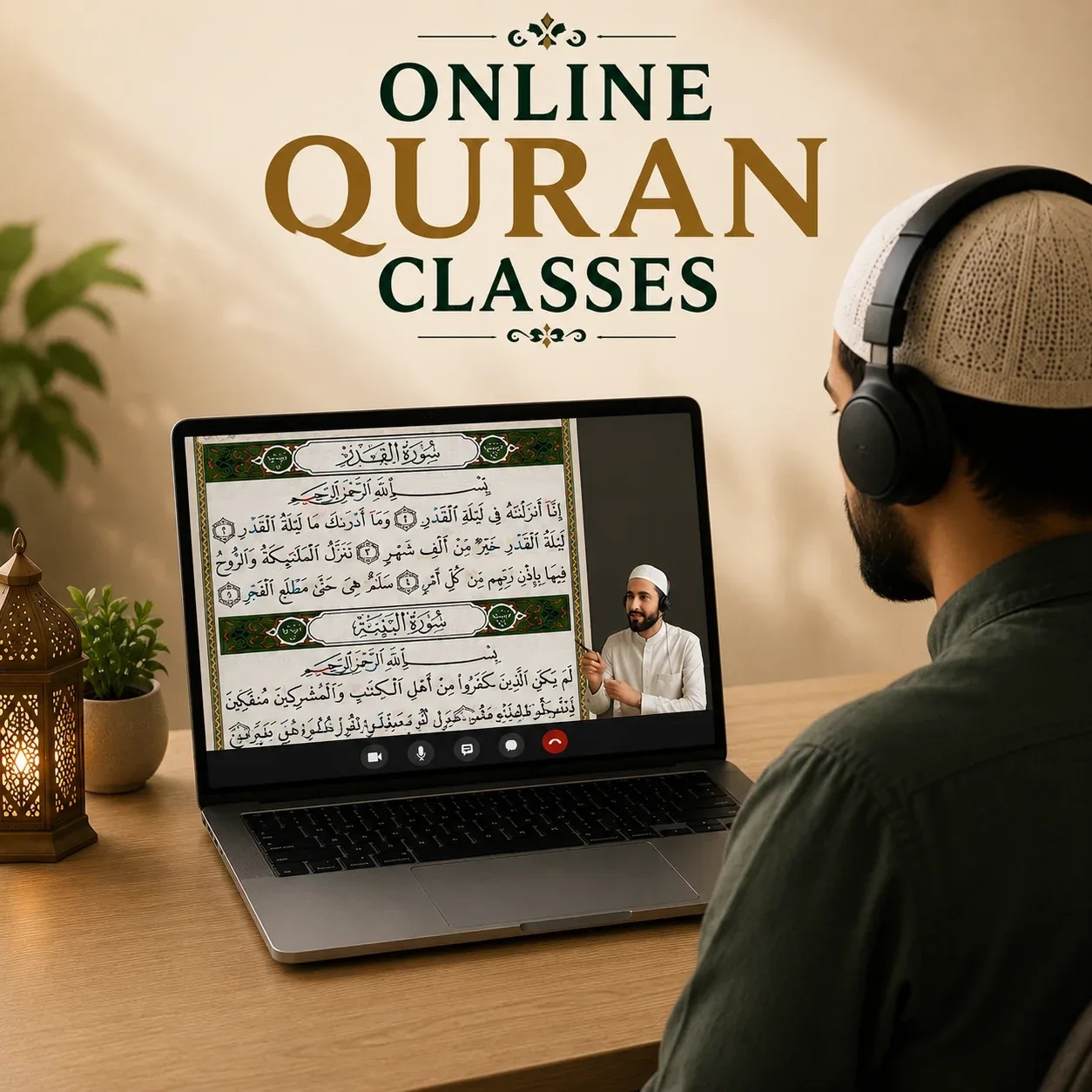
Readers who need that kind of correction can consider teacher-led online Quran classes, including those available through Al Quran Recitation Academy. The purpose is different from a Tafsir lesson. One deals primarily with how the Quran is read; the other deals with its explanation.
There is no need to force both into a single study session. Recitation can have its own practice time, while Tafsir is studied from a shorter passage at another point in the week.
Hadith Is Related, but It Is a Separate Field
Hadith sometimes appears in Tafsir because scholars may use reports from the Prophet Muhammad when explaining Quranic passages. That does not make Hadith study another name for Tafsir.
Hadith has its own texts, terminology, and areas of study. Someone who wants to study it separately can look at a dedicated Hadith studies course, but it should not be treated as a substitute for learning Quran Tafsir.
The useful habit is simple: know what kind of source you are reading and what question it is meant to answer. A translation, a Tafsir work, a recitation lesson, and a Hadith class may all belong in Quran learning, but they do different jobs.
Images

ahmadraza
Student
Level 1
PM
Moving from Quran recitation to understanding the meaning can make reading more thoughtful and meaningful, especially when learning through reflection and context. I also work with BdVegas, and my website is related to online casino gaming and entertainment. For readers exploring bdvegas login, clear account information and simple navigation can make the online gaming experience more convenient.